Fees
Ivy Admissions Strategy
$1500/hr
Standardized Tests and Academics
$1000/hr
Introduction
For over 25 years, I have helped students excel in academics, standardized tests, and Ivy admissions. I work with students as young as 7 and as old as 70. Most of my students are between 10 and 18 years old.
How I Got Started
Growing up, I was always frustrated with the education I found in school. It seemed utterly inefficient, poorly designed, and completely lacking any individualization. Eventually, I started experimenting with doing things my own way. I learned algebra in a few weeks to skip a grade in math, took my first college course at age 13, and skipped a grade in Latin. I got 5s on 10 AP exams in high school, but I did 6 of them without a school course, relying on self study. I had the highest grades in the hardest classes and the highest SAT and PSAT scores in my graduating class. Later, I went to Brown University, getting a Bachelor’s of Science in abstract math, and then got perfect scores on the GRE and GMAT.
But what I loved the most was tutoring. I loved helping my friends with schoolwork, and when I finally was allowed to join a tutoring program in high school, it was my favorite activity. By college I was actually getting paid to tutor. My plan was to first make money in finance or consulting, and then do education after that. So, when I started my first job (as an actuary), I started doing some tutoring on the side. Within a few months, demand for my tutoring had grown so much that I quit my job and made tutoring my job.
In the over 25 years since then, I’ve gotten to work on many parts of education, including curriculum design, education game design, educational software design, writing books, teaching group classes, etc. But tutoring remains my passion and my flagship service.
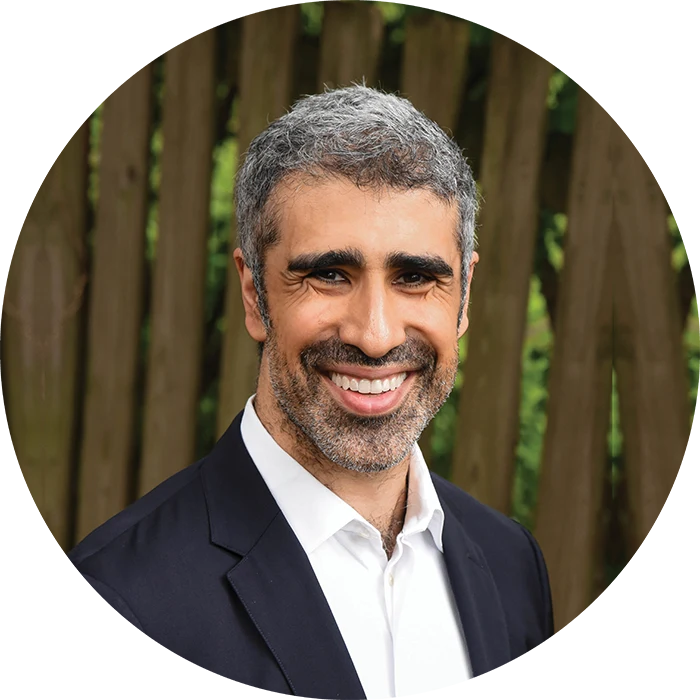 Arvin Vohra
 vs. AI
There is only one subject in which I know more than frontier AIs: Ivy admissions strategy. I have insights, methods, and strategies that no frontier AI currently has. In Ivy strategy, Claude and ChatGPT cannot do what I can teach you to do.
But what about other areas? At this point, top level AI models can solve SAT problems and calculus problems just as well as I can. Why come to me when AIs are so cheap?
My expertise has never been in the academic subjects themselves. PhD math students have always known more math than I do, and PhD chemistry students have always known more chemistry than I do. My expertise is in learning, motivation, and education.
In other words, I can’t solve a math problem faster than Claude can. But I can help you learn to solve math problems, write English papers, and dominate standardized tests much faster and better than any AI can.
Ivy Admissions Strategy
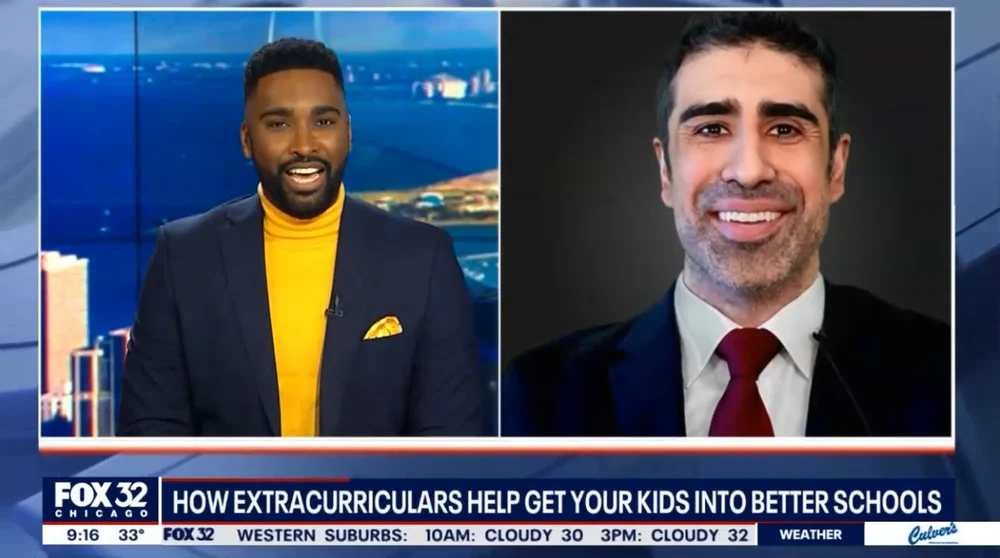
In high school, I was a National Merit Scholar Finalist with the highest SAT and PSAT scores in my graduating class. I had the highest grades in the hardest classes in my school. I was the president of several clubs, some of which I had founded. I was captain of the school’s Science Bowl team, which I had led to multiple upset victories, defeating schools like TJ, a major science and tech magnet school. I had won some of the school’s most prestigious awards. I had done plenty of community service, both in the U.S. and abroad. I was also a varsity athlete.
When the college rejection letters started pouring in, I was shocked. I even got rejected from some of my safety schools!
I was the classic case of “Great product, bad marketing.” I couldn’t have been a better student. And I couldn’t have been a worse marketer. Looking back, I can see how I made every mistake in the book, especially on my essays.
I was both angry and embarrassed that all the work I’d put in hadn’t worked. But once the anger subsided, I decided to learn what I’d done wrong.
By chance, I had read an article about getting into Brown University, which was my second choice school. I had followed the advice, added a few tweaks, and got in. So I read more articles and books. I listened to the stories of students who were the opposite of me: academically weak students who got into Ivies. I learned from admissions officers at elite colleges what really went on behind the scenes. I learned everything I could about elite college admissions.
Soon, I was on the cutting edge of Ivy strategy, creating new techniques that I taught to students, parents, and other admissions consultants. I discovered how principles of mythology and storytelling could dramatically enhance an application. Bit by bit, I cracked the code of Ivy admissions. Soon, it became less of an art, and more of a science.
The countless students I’ve helped get into Ivies have more than balanced out the rejection letters I got. Some were academic superstars, like I had been. Most weren’t. Once I understood how college admissions actually worked, I could show students how to outsmart the system.
Today, I help students master the secrets of Ivy admissions, outwrite Claude, and surpass their ambitious competitors.
SAT, PSAT, and ACT
My SAT story is very different from my Ivy strategy story. I was always good at standardized tests. Now I’m a lot better. In high school, I had a 790M and 790V on the SAT. But after I learned how to do this better, I got perfect scores on both the GRE and GMAT, finishing each with over an hour to spare. Today, nearly all of my students get above 1500 SAT scores; several have even hit the magic 1600.
Unsurprisingly, my approach is very different from mass market programs. First, I teach direct solutions, not elaborate, time-consuming workarounds. I don’t teach or allow “plug-in” or “backsolve,” for example. Instead, I teach direct, algebraic solutions in math, rule-based solutions in grammar, and analytical approaches to reading.
Second, I address the underlying issues. Mass market programs teach students how to avoid fixing their issues. For example, they teach students how to avoid algebra. I don’t. If a student struggles with algebra…I help that student master algebra.
But realistically, if you’re considering my tutoring program, you’re probably not looking at a mass market course. You’re more likely looking at other elite national SAT experts. How my approach differs from theirs is a lot more interesting.
Most national level SAT experts arrived through the following process. First, they did poorly on the SAT. Then, with a lot of effort, they first categorized SAT questions (“There are only 317 types of math questions,” or “There are just 493 types of reading questions.”). Then, through Herculean effort, they memorized how to solve each of those hundreds of question types. Later, they taught other students to do the same.
Those stories are incredibly inspiring; however, those approaches are silly and inefficient. If you’ve memorized 500 math formulas, you’ve missed the point of math. I majored in math and teach math past calculus, but I doubt if I know more than 10 formulas.
Sometimes, instead of adding 500 horses to a carriage, you need to build an engine.
I don’t teach students to memorize hundreds of separate approaches to hundreds of problem types. Instead, I help students master the small number of skills that let you solve a large number of problem types. That applies in math, grammar, and reading.
By the way, the SAT is constantly adding new problem types. That’s why the experimental questions on the SAT exist. (The experimental questions aren’t part of your score. The College Board tests out new questions by putting them on real tests without telling students which ones are experimental.) Even if you memorize 500, or 5000, types of questions, your knowledge will become obsolete.
But the universal skills I teach, including problem solving, spatial reasoning, logical reasoning, verbal fluency, grammar principles, etc., will help you solve both current and future SAT problems (and ACT, PSAT, GRE, LSAT, GMAT, and MCAT problems). They will also help you excel in school and college academics.
Academics
I help students get into and excel at elite private and magnet schools (as well as regular public schools).
Most students work with me on multiple subjects and standardized tests, which gives awesome synergies. The skills I teach students in solving systems of equations in math carry over to figuring out redox reactions in chemistry. The analytical reading skills I teach for SAT reading carry over to AP English and history courses.
I help with almost every subject and standardized test. That includes unusual, advanced, and proprietary courses often found in private and boarding schools. It also specifically includes the curricula at Exeter, Andover, Stuyvesant, Bronx Science, Deerfield, and Le Rosey. The only thing I don’t help with is foreign languages.
Other Skills
I work with students on a variety of other skills, including public speaking, interview training, speed reading, etc.
Location
Tutoring happens online, using my bespoke Tailored Class video room. Tailored Class is like an upgraded Zoom. I use a professional DSLR camera and a studio quality microphone, along with custom whiteboards and other advanced tools designed specifically for my program.
 The bookInvitation to the Iviesby Arvin Vohra & Chelsey Snyder-Singh